

• Mon, Aug 2026

Dr. Jignesh R Jani – Humanitarian, Human Rights Advocate, CSR Professional & Voice for Peace | FlexiMaps

Dr. Jignesh R Jani – Humanitarian, Human Rights Advocate, CSR Professional & Voice for Peace | FlexiMaps

Discover the inspiring journey of Dr. Jignesh Ramanlal Jani, humanitarian, CSR professional, human rights advocate, and peace ambassador dedicated to community welfare, constitutional values, social responsibility, and nation building.

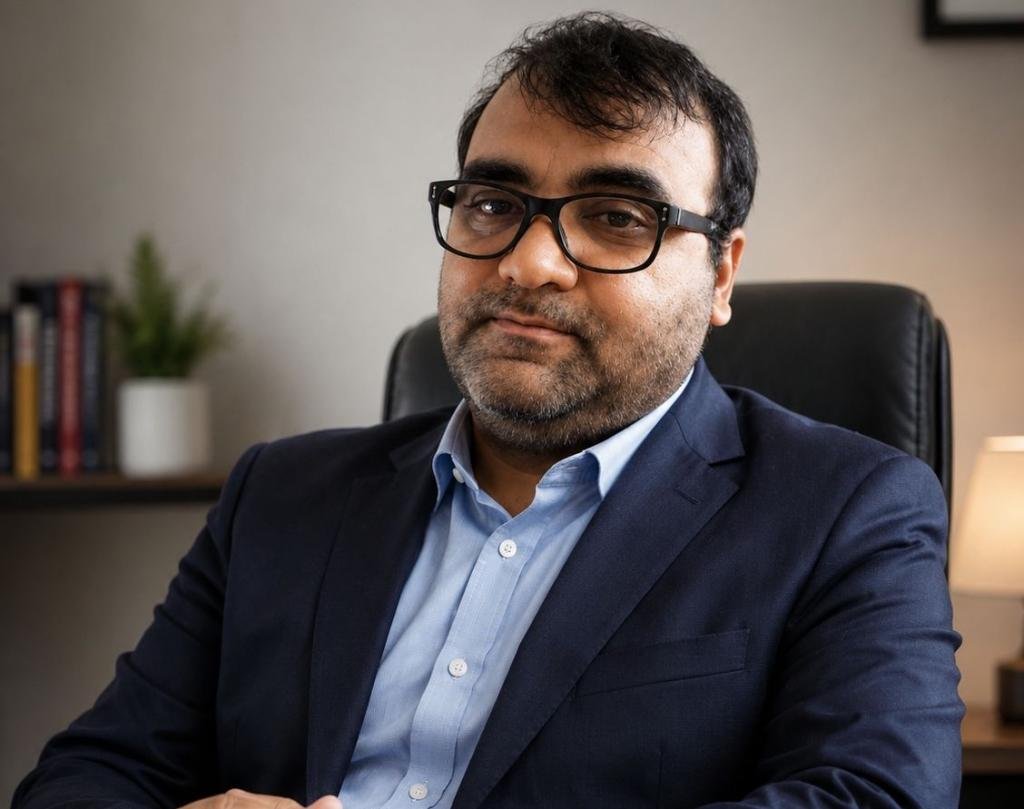
whatsapp-image-2026-08-04-at-104447-am-2.jpeg


Dr. Jignesh Ramanlal Jani: A Life Dedicated to Humanity, Constitutional Values and Nation Building

History remembers many people for the positions they held, the wealth they accumulated, or the businesses they built. Yet, there is another category of individuals whose legacy is measured differently—not by titles or possessions, but by the lives they touch, the hope they create, and the values they leave behind for future generations. These are people who quietly dedicate themselves to society, believing that true success lies in serving humanity rather than seeking recognition.

Among such personalities is Dr. Jignesh Ramanlal Jani, whose journey reflects a lifelong commitment to human rights, community welfare, Corporate Social Responsibility (CSR), constitutional values, and humanitarian service. Over the years, his work has been driven by one consistent belief: a nation's real strength is built not only through economic development but through educated citizens, ethical leadership, responsible governance, social harmony, and compassion towards every individual.

At the age of 57, Dr. Jani has emerged as a respected humanitarian voice advocating peace, dialogue, democracy, and social responsibility. While his professional association with Larsen & Toubro (L&T) provided valuable experience in corporate systems and CSR initiatives, his true identity has always extended beyond the workplace. Throughout his life, he has actively participated in community welfare programmes, disaster relief initiatives, medical assistance, anti-corruption awareness, and public service, believing that every individual has a responsibility to contribute towards building a stronger and more compassionate society.

For Dr. Jani, humanitarian work has never been limited to responding to emergencies. Instead, it represents a continuous commitment to improving people's lives through awareness, education, ethical values, and community participation. Whether supporting people affected by floods, assisting economically weaker families, promoting human rights, or encouraging constitutional awareness, his work reflects a philosophy centred on dignity, equality, and collective responsibility.

One of the defining characteristics of his journey is his unwavering faith in democratic institutions and constitutional values. According to Dr. Jani, democracy becomes stronger when citizens remain informed, responsible, and actively engaged in constructive dialogue. He believes Parliament represents the highest democratic platform for discussing national challenges, where governments and opposition parties alike share the responsibility of ensuring transparency, accountability, and meaningful public debate.

His perspective also extends beyond domestic issues. At a time when geopolitical conflicts continue to affect millions of people around the world, Dr. Jani consistently advocates diplomacy over violence, cooperation over confrontation, and dialogue over war. He believes lasting peace is achieved not through military victories but through mutual understanding, humanitarian values, and international cooperation.

The message he continues to share is simple yet profound: humanity must remain above hatred, compassion above conflict, and unity above division.

Throughout his public life, Dr. Jani has also emphasised the importance of education, patriotism, moral values, and responsible citizenship. According to him, the idea of "Nation First" cannot become meaningful through slogans alone. It becomes reality when citizens understand both their rights and responsibilities, respect constitutional institutions, uphold ethical values, and actively contribute to national development.

His admiration for Gujarat's development model reflects this broader vision. He recognises the state's progress in agriculture, infrastructure, industrial growth, digital governance, education, healthcare, tourism, and entrepreneurship as examples of how long-term planning and public participation can transform society. At the same time, he believes every region of India possesses unique strengths that, when nurtured responsibly, contribute towards the nation's collective progress.

Beyond recognition and honours, including an Honorary Doctorate acknowledging his contributions to social service, human rights, and community welfare, Dr. Jani continues to remain grounded in the belief that service itself is the greatest reward. For him, every individual helped, every community strengthened, and every positive conversation initiated represents a meaningful achievement.

His recently articulated global message, "One Earth. One Humanity. One Shared Future.", beautifully summarises the philosophy that has guided his life's work. It is not merely a slogan but an invitation for people across nations, cultures, and communities to work together towards a future built on peace, sustainability, education, innovation, compassion, and mutual respect.

In a world often divided by differences, Dr. Jignesh Ramanlal Jani reminds us that humanity's greatest strength has always been its ability to cooperate. Borders may separate nations, languages may differ, cultures may vary, but the aspirations shared by humanity remain remarkably similar—a life of dignity, opportunity, security, harmony, and hope.

His journey is therefore not simply the story of one individual. It is a reminder that meaningful change begins when ordinary people choose extraordinary responsibility. Whether through humanitarian service, constitutional awareness, ethical leadership, or community development, every positive action contributes towards building a stronger nation and a better world.

For Dr. Jignesh Ramanlal Jani, success is not measured by what a person gains during life. It is measured by what they leave behind for society.

And perhaps that is the most enduring definition of humanity itself.


Table of contents [Show]

The Making of a Humanitarian – A Journey Guided by Values, Not Recognition

Every meaningful journey begins with values. Long before awards, public recognition, or humanitarian initiatives became part of his life, Dr. Jignesh Ramanlal Jani was a young student who believed that honesty, fairness, justice, and responsibility were not merely ideals to admire—they were principles that should be practiced every day.

During his formative years, he developed a deep respect for truth, ethical conduct, and social responsibility. These values became the foundation upon which his entire life's journey would later be built. While many people pursue personal success as their primary goal, Dr. Jani gradually developed a different perspective. He believed that individual growth becomes truly meaningful only when it contributes to the well-being of society.

As he progressed through education and professional life, this belief continued to grow stronger. Rather than limiting himself to personal achievements, he remained sensitive to the challenges faced by ordinary citizens. Whether observing social inequalities, economic hardships, or humanitarian crises, he recognised that lasting change requires individuals who are willing to step forward with compassion and responsibility.

These early experiences shaped his understanding that social service is not an occasional act of charity—it is a continuous commitment to humanity. According to Dr. Jani, every citizen possesses the ability to contribute positively, regardless of profession or background. Even small acts of kindness, honesty, and responsibility create a ripple effect that strengthens families, communities, and ultimately the nation itself.

Throughout the years, this philosophy gradually transformed into structured social work. Instead of remaining a silent observer, Dr. Jani chose to actively participate in initiatives that promoted public welfare, human rights awareness, community development, and humanitarian assistance. His commitment was never driven by publicity or recognition but by the simple belief that helping others is one of the highest responsibilities of human life.

During periods of communal tension and difficult social circumstances, he worked alongside local administration and community members to assist affected families and support relief efforts. These experiences further reinforced his belief that compassion has the power to unite people even during the most challenging situations. According to him, humanity should always rise above differences of religion, language, caste, or background, because every individual deserves dignity, respect, and equal opportunity.

Over time, these principles evolved into a lifelong mission centred on human rights, community welfare, constitutional values, and social harmony. His work reflects the understanding that sustainable progress is possible only when societies are built upon justice, equality, mutual respect, and responsible citizenship.

For Dr. Jignesh Ramanlal Jani, humanitarian service has never been about changing the entire world overnight. Instead, it has always been about improving one life at a time, strengthening one community at a time, and inspiring one individual after another to become part of a larger movement dedicated to compassion and positive change.

This quiet yet unwavering commitment continues to define his journey today. It reminds us that extraordinary contributions rarely begin with extraordinary circumstances—they begin with ordinary people choosing to live by extraordinary values.


From Corporate Responsibility to Human Responsibility

Professional careers often shape an individual's expertise, but they can also shape character, leadership, and a broader understanding of society. For Dr. Jignesh Ramanlal Jani, his association with Larsen & Toubro (L&T) became more than a professional chapter—it strengthened his appreciation for discipline, accountability, organisational excellence, and the growing importance of Corporate Social Responsibility (CSR).

Working within one of India's most respected organisations provided valuable exposure to structured systems, responsible governance, and community-oriented initiatives. It reinforced the understanding that businesses are not only engines of economic growth but also important contributors to social development. Corporate success, according to Dr. Jani, achieves its highest value when it creates positive impact beyond financial performance and actively contributes towards improving people's lives.

While fulfilling professional responsibilities, he continued nurturing his passion for humanitarian work. Instead of viewing social service as separate from professional life, he recognised that both could complement each other. The values of responsibility, integrity, teamwork, and accountability learned in the corporate environment became equally valuable in community development and public welfare initiatives.

As years passed, Dr. Jani increasingly devoted his time and energy towards CSR activities, community development, medical assistance, human rights awareness, disaster relief, and support for economically weaker sections of society. His transition was not driven by a change in profession alone but by a broader sense of purpose. He realised that meaningful development requires collaboration between individuals, communities, businesses, and institutions working together for the common good.

One of the defining lessons he draws from his corporate experience is that sustainable progress depends upon responsibility at every level. Organisations have responsibilities toward society, governments have responsibilities toward citizens, and citizens themselves have responsibilities toward the nation. When each fulfils its role with honesty and commitment, social development becomes both meaningful and sustainable.

This philosophy continues to influence Dr. Jani's humanitarian work today. Rather than separating corporate responsibility from human responsibility, he views them as complementary forces capable of creating long-term positive change. CSR, in his perspective, is not merely about financial contributions or charitable donations—it is about creating opportunities, supporting communities, promoting education, protecting human dignity, and building stronger relationships between organisations and society.

Through this journey, Dr. Jignesh Ramanlal Jani demonstrates that professional success and humanitarian service need not exist as separate paths. Together, they can become powerful instruments for creating a society where growth is measured not only by economic development but also by compassion, responsibility, and the collective well-being of people.


Standing With Society During Difficult Times

Humanitarian service is often tested not during times of comfort, but during moments of crisis. Natural disasters, social unrest, economic hardship, and public emergencies reveal the true character of individuals who choose to place humanity above personal convenience. Throughout his journey, Dr. Jignesh Ramanlal Jani has consistently believed that real leadership begins when people step forward to support others during their most difficult moments.

For several decades, his humanitarian work has focused on standing beside communities facing adversity. Whether responding to flood-affected regions, extending medical assistance to those in need, supporting economically weaker families, or participating in community welfare initiatives, his objective has always remained the same—to ensure that help reaches people with dignity, compassion, and responsibility.

One of the defining aspects of his social work has been his willingness to contribute during natural disasters and emergency situations. Floods often leave families without shelter, food, healthcare, and basic necessities. During such circumstances, humanitarian action becomes more than charity; it becomes an essential expression of collective responsibility. Dr. Jani has actively participated in relief efforts aimed at supporting affected communities, helping coordinate assistance, and encouraging community participation in rehabilitation initiatives.

Medical assistance has remained another important pillar of his humanitarian efforts. Access to timely healthcare is one of the fundamental needs of every society, particularly for economically disadvantaged individuals. Through various community initiatives and social service activities, he has supported efforts that improve healthcare accessibility and encourage public awareness regarding health and well-being. His belief is that healthcare should never become a privilege available only to a few, but a shared responsibility that strengthens society as a whole.

Beyond disaster relief and healthcare, Dr. Jani has consistently worked towards community development by encouraging cooperation among citizens, social organisations, and public institutions. According to him, strong communities are built not merely through infrastructure or economic growth, but through trust, compassion, and mutual support. Every citizen has the capacity to contribute—whether through volunteer work, education, mentorship, resource sharing, or simply extending a helping hand to someone in need.

During periods of communal tension and socially sensitive situations, Dr. Jani also worked alongside local administration to support relief efforts and assist affected individuals. These experiences reinforced his conviction that humanity must always prevail over division. While differences of opinion, culture, or belief may exist within society, compassion remains the common value capable of bringing communities together during challenging times.

His humanitarian philosophy rejects discrimination in every form. Assistance, according to him, should never be influenced by religion, caste, language, region, or social status. Human suffering has no identity, and therefore humanitarian service must remain impartial, inclusive, and respectful of every individual's dignity.

Another important dimension of his work has been promoting awareness rather than dependency. Dr. Jani believes lasting social change cannot be achieved solely through financial assistance or temporary relief. Communities become stronger when individuals are educated, empowered, and encouraged to participate in solving their own challenges. For this reason, his humanitarian initiatives have consistently emphasised awareness, responsibility, and active community participation alongside direct assistance.

Throughout these years of service, one principle has remained constant: humanity is strengthened not by isolated acts of generosity but by consistent commitment to serving others. Every family supported, every individual assisted, and every community strengthened represents another step towards building a more compassionate and resilient society.

For Dr. Jignesh Ramanlal Jani, humanitarian work has never been about being recognised as a social worker. It has always been about fulfilling a simple yet profound responsibility—to stand beside people when they need support the most, and to remind society that compassion remains one of humanity's greatest strengths.


Human Rights Begin With Human Dignity

Human rights are often discussed in legal documents, international conventions, and constitutional frameworks. However, Dr. Jignesh Ramanlal Jani believes that their true meaning begins much earlier—with the recognition of every person's inherent dignity.

According to him, human rights are not privileges granted to a select few. They are universal values that remind society that every individual deserves respect, equality, safety, opportunity, and justice regardless of background, religion, language, gender, economic status, or personal beliefs.

For Dr. Jani, protecting human rights is not limited to responding after injustice occurs. It also means creating conditions where injustice becomes less likely to happen in the first place. This requires quality education, ethical leadership, transparent governance, constitutional awareness, equal opportunities, and responsible citizenship.

Throughout his humanitarian journey, he has consistently encouraged communities to understand both their rights and their responsibilities. A society becomes stronger when citizens are aware of constitutional values while also respecting the rights of others. Freedom and responsibility, in his view, must always move together.

He further believes that dignity forms the foundation of every meaningful society. Whether assisting economically weaker families, supporting disaster-affected communities, or participating in public welfare initiatives, every humanitarian action should preserve the self-respect of the individual receiving assistance. Helping someone should never diminish their dignity—it should strengthen their confidence to rebuild their own future.

Dr. Jani also views education as one of the strongest protectors of human rights. An educated society is better equipped to recognise injustice, uphold democratic values, reject discrimination, and participate constructively in national development. For this reason, he consistently advocates educational awareness alongside humanitarian service, believing that knowledge empowers citizens to become active guardians of both democracy and human dignity.

His understanding of human rights therefore extends beyond legal protection. It reflects a broader philosophy centred on compassion, equality, constitutional values, ethical conduct, and social responsibility. According to Dr. Jignesh Ramanlal Jani, when societies place human dignity at the centre of every decision, human rights naturally become stronger, communities become more united, and nations become more resilient.

1

For him, humanity is not measured by the power we possess, but by the respect we show towards every human life.

Nation First – Beyond a Slogan

The phrase "Nation First" is often heard in speeches, public discussions, and national celebrations. For Dr. Jignesh Ramanlal Jani, however, these two words carry a far deeper meaning. He believes that patriotism is not measured by slogans alone—it is reflected through everyday actions, responsible citizenship, constitutional values, and a genuine commitment to the progress of society.

According to Dr. Jani, a strong nation is not built only by governments. It is built by millions of responsible citizens who understand both their rights and their duties. Every teacher educating young minds, every doctor saving lives, every farmer feeding the nation, every entrepreneur creating employment, every soldier protecting borders, every scientist innovating for the future, and every honest citizen contributing responsibly becomes an essential part of nation building.

In his view, education is the strongest foundation of patriotism. An educated citizen develops the ability to think critically, respect constitutional institutions, distinguish facts from misinformation, and participate meaningfully in democratic processes. Education also creates awareness of civic responsibilities, encouraging people to contribute positively to their communities rather than remaining passive observers.

Dr. Jani believes patriotism should inspire people to rise above narrow personal interests and work for the larger welfare of society. Love for one's country is expressed through honesty, discipline, respect for law, social responsibility, environmental consciousness, and active participation in national development. A nation progresses when its citizens choose integrity over corruption, cooperation over conflict, and responsibility over indifference.

He also emphasises that constitutional awareness plays an equally important role in strengthening democracy. Citizens who understand the Constitution are better equipped to protect democratic institutions, uphold justice, and respect the rights of fellow citizens. According to him, democracy flourishes when freedom is exercised responsibly and when constitutional values become part of everyday life.

For Dr. Jani, moral values are inseparable from national development. Economic growth may strengthen a country's infrastructure, but ethical leadership, honesty, compassion, and responsible citizenship strengthen its character. A developed nation requires not only modern technology and strong industries but also individuals who value truth, fairness, and accountability.

He frequently reminds young people that the future of India will not be determined solely by policies or economic indicators. It will be shaped by the quality of its citizens. Every responsible decision made today contributes towards building a stronger nation tomorrow. Every educated child, every ethical professional, every honest public servant, and every socially responsible entrepreneur adds another foundation stone to India's future.

According to Dr. Jani, Nation First therefore represents a lifelong commitment rather than a political expression. It encourages citizens to protect democratic institutions, respect diversity, preserve cultural heritage, contribute to economic development, support social harmony, and work collectively towards national progress.

His message is both simple and timeless:

"A strong nation is created when education builds knowledge, patriotism builds character, constitutional values build justice, and responsible citizens build the future."

For Dr. Jignesh Ramanlal Jani, nation building is not the responsibility of a few—it is the shared responsibility of every Indian.


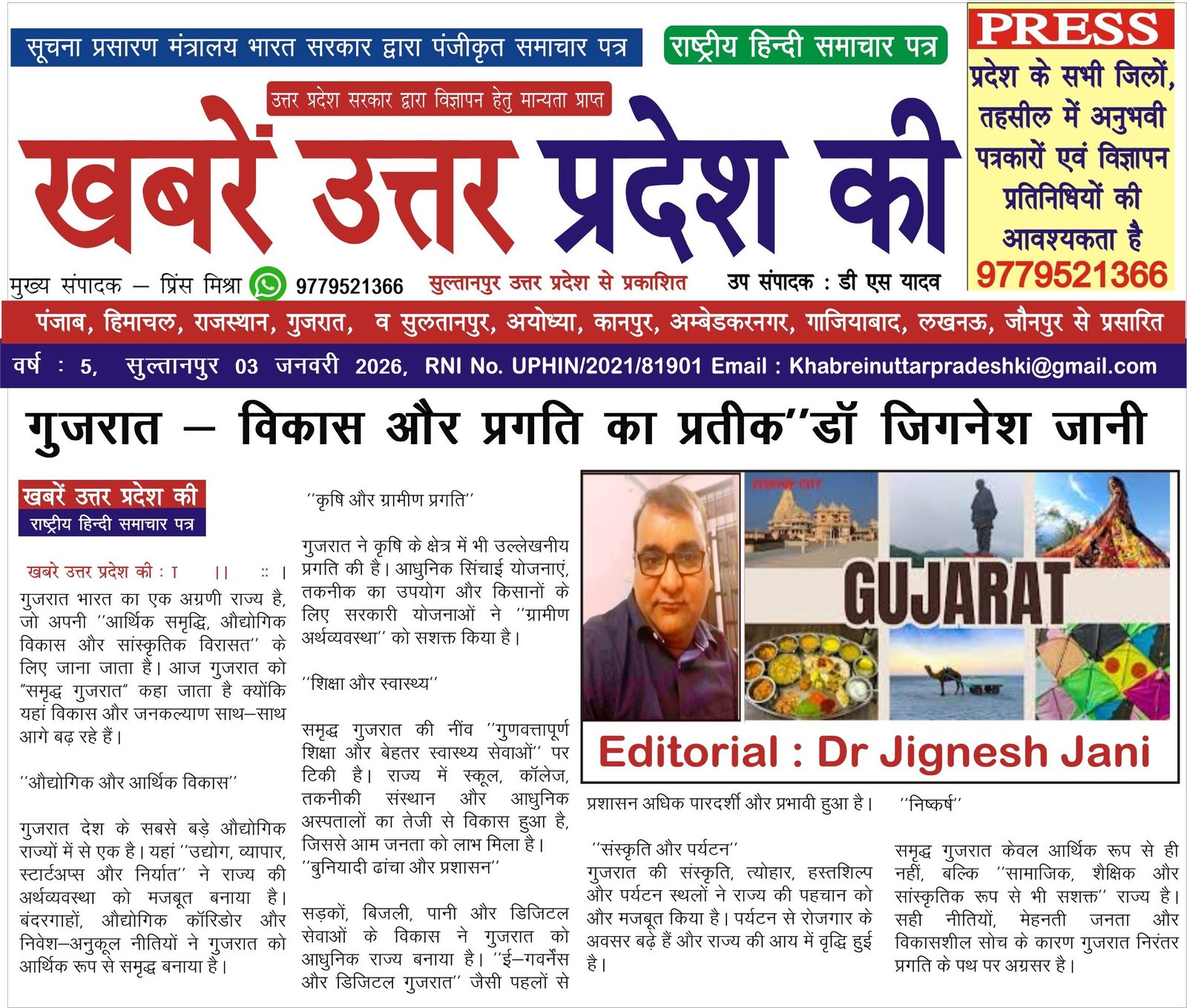
whatsapp-image-2026-08-04-at-104013-am-1.jpeg

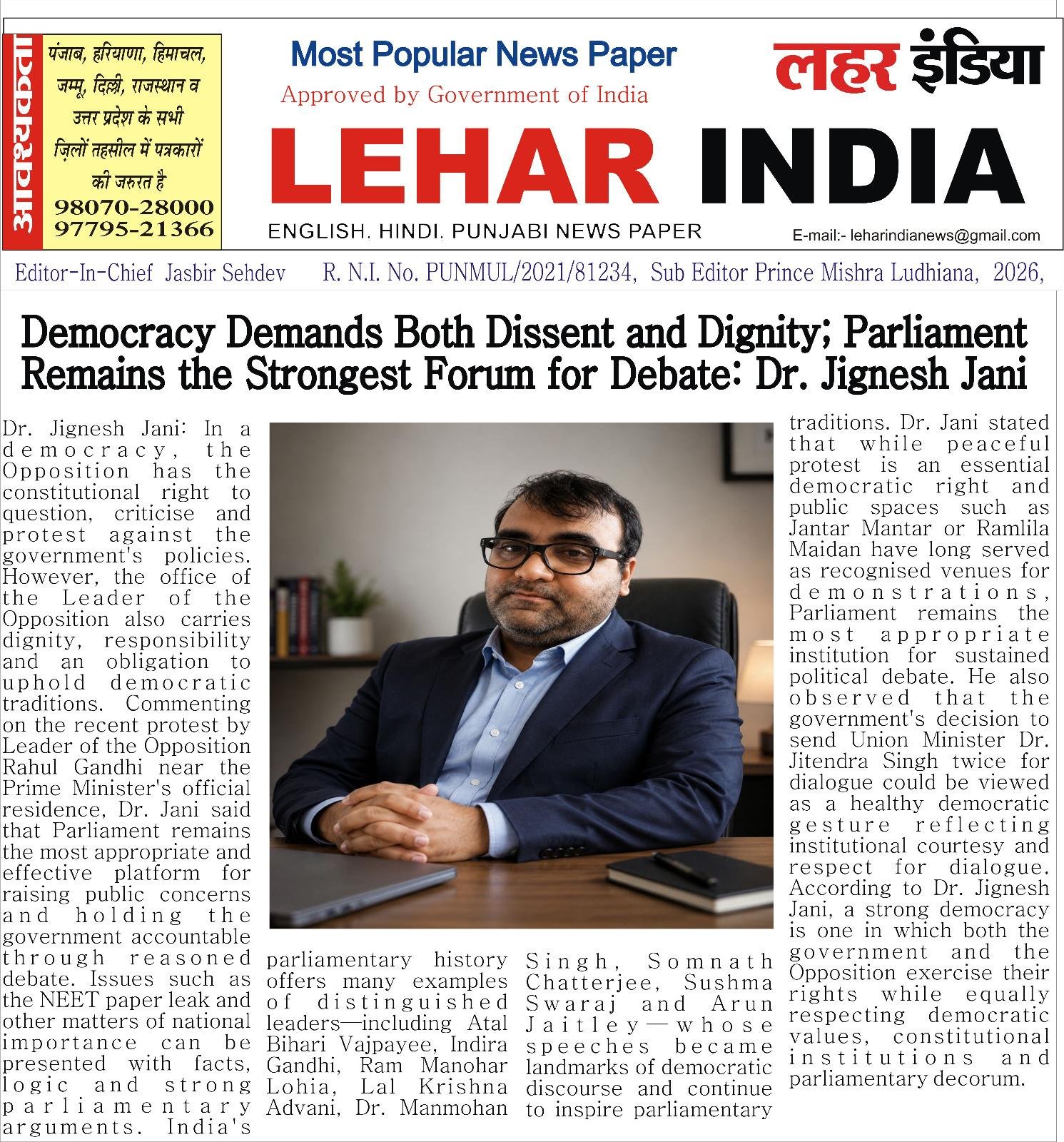
Democracy Flourishes Through Dialogue, Debate and Constitutional Responsibility

As a humanitarian and advocate of constitutional values, Dr. Jignesh Ramanlal Jani believes that democracy derives its strength not from unanimous agreement but from respectful disagreement conducted within the framework of the Constitution.

India is the world's largest democracy, built upon principles of justice, liberty, equality, and fraternity. According to Dr. Jani, these principles remain meaningful only when democratic institutions function with dignity, transparency, and accountability. Citizens, elected representatives, government institutions, and opposition parties all have distinct constitutional responsibilities that contribute towards maintaining a healthy democratic system.

He believes that the Opposition plays an essential constitutional role in every democracy. Questioning government decisions, seeking accountability, highlighting public concerns, and participating in constructive criticism are not obstacles to democracy—they are integral components of democratic governance. Healthy debate enables better policymaking, encourages transparency, and strengthens public confidence in democratic institutions.

At the same time, Dr. Jani emphasises that these democratic rights should always be exercised responsibly. Public discussions should remain fact-based, respectful, and focused on finding practical solutions rather than creating unnecessary division. Democracy benefits most when disagreements are expressed through reasoned dialogue rather than confrontation.

According to him, Parliament remains the highest constitutional platform for discussing issues of national importance. Matters affecting millions of citizens—including education, governance, healthcare, economic development, public welfare, and national policies—deserve detailed discussion supported by facts, expert opinions, and constitutional processes.

Speaking about issues such as the NEET examination and concerns regarding examination integrity, Dr. Jani believes that students deserve transparency, fairness, and confidence in public institutions. He maintains that such matters should be addressed through impartial investigations, institutional reforms, and meaningful parliamentary debate so that public trust remains strong while protecting the interests of deserving students.

For him, democratic maturity is demonstrated through institutions that encourage dialogue rather than hostility. Governments should remain open to constructive criticism, while opposition parties should continue fulfilling their constitutional responsibilities with dignity and responsibility. Both share the common objective of serving the people and strengthening the nation.

Dr. Jani also believes that informed citizens play an equally important role in democracy. Public participation should be based upon verified information, constitutional awareness, and thoughtful understanding rather than misinformation or emotional reactions. Responsible citizenship strengthens democratic institutions and encourages policies that benefit society as a whole.

Ultimately, his democratic philosophy is built upon one central principle: the Constitution provides India with both rights and responsibilities. When these are exercised with integrity, mutual respect, and commitment to national progress, democracy becomes not merely a system of governance but a powerful instrument for social justice, development, and unity.

For Dr. Jignesh Ramanlal Jani, democracy is strongest when every voice is heard, every institution is respected, and every debate seeks solutions that place the nation above division.

Gujarat – A Model of Development Through Vision, Enterprise and Inclusive Growth

Every state contributes uniquely to India's progress, shaped by its history, culture, people, and leadership. For Dr. Jignesh Ramanlal Jani, Gujarat represents an inspiring example of how long-term planning, entrepreneurship, efficient governance, and public participation can work together to create sustainable development.

According to Dr. Jani, Gujarat's success is not defined by economic growth alone. It reflects balanced progress across multiple sectors, including agriculture, industry, infrastructure, education, healthcare, digital governance, tourism, entrepreneurship, and rural development. The state's development journey demonstrates that when governments, industries, farmers, entrepreneurs, and citizens work together with a shared vision, remarkable transformation becomes possible.

Agriculture – Empowering Farmers Through Modern Practices

Agriculture has always been one of Gujarat's strongest foundations. Dr. Jani believes that the adoption of modern irrigation systems, improved farming techniques, technological innovation, and supportive government initiatives has significantly strengthened the agricultural sector.

Farmers today are increasingly benefiting from better water management, scientific farming methods, improved seed varieties, and access to modern agricultural knowledge. These developments have contributed not only to higher productivity but also to improved livelihoods in rural communities. According to him, empowering farmers ultimately strengthens the entire nation because agriculture remains the backbone of India's food security.

Industrial Growth – The Engine of Economic Progress

Gujarat has established itself as one of India's leading industrial destinations. Dr. Jani attributes this growth to a combination of entrepreneurship, investment-friendly policies, robust infrastructure, strong manufacturing capabilities, export-oriented industries, and world-class ports.

The state's industrial ecosystem has encouraged the growth of both large enterprises and micro, small, and medium enterprises (MSMEs). Manufacturing, petrochemicals, pharmaceuticals, engineering, textiles, renewable energy, logistics, and export industries have collectively contributed to employment generation and economic development.

He believes that Gujarat's industrial success demonstrates how innovation, ease of doing business, and policy stability can attract investment while creating opportunities for future generations.

Infrastructure – Building the Foundation for Growth

According to Dr. Jani, sustainable development requires strong infrastructure. Gujarat has consistently invested in improving roads, highways, ports, electricity, water supply, industrial corridors, logistics networks, and digital connectivity, creating an environment that supports both economic activity and improved quality of life.

Modern infrastructure not only facilitates business growth but also enhances education, healthcare accessibility, tourism, transportation, and overall public welfare. These investments continue to strengthen Gujarat's competitiveness both nationally and internationally.

Education & Healthcare – Investing in Human Capital

Economic progress alone cannot define development. Dr. Jani believes that quality education and accessible healthcare remain essential pillars of a prosperous society.

Gujarat has witnessed significant improvements in educational institutions, technical education, skill development, and healthcare infrastructure. Universities, professional colleges, research institutions, hospitals, and specialised healthcare facilities continue to contribute towards developing skilled professionals and improving public health outcomes.

According to him, investment in education creates knowledgeable citizens, while investment in healthcare creates healthier communities capable of contributing productively to society.

Digital Governance & Technology

Technology has transformed the relationship between governments and citizens. Dr. Jani appreciates Gujarat's continued emphasis on digital governance, where technology is increasingly used to improve transparency, efficiency, accessibility, and public service delivery.

Digital platforms have simplified access to government services, reduced administrative barriers, and encouraged greater citizen participation. He believes that digital transformation not only improves governance but also strengthens public trust by making services faster, more transparent, and more accessible.

Tourism, Culture & Heritage

Beyond economic achievements, Gujarat possesses a rich cultural heritage that reflects centuries of history, tradition, art, spirituality, and entrepreneurship. Dr. Jani believes that the promotion of tourism, cultural festivals, heritage conservation, and historical landmarks has strengthened both the state's identity and its economy.

Tourism generates employment, supports local businesses, encourages infrastructure development, and promotes cultural exchange. At the same time, preserving heritage ensures that future generations remain connected to their history while embracing modern development.

A Vision Beyond Economic Growth

For Dr. Jignesh Ramanlal Jani, Gujarat's development story is ultimately about balanced progress. Economic growth, social welfare, educational advancement, administrative efficiency, environmental responsibility, and public participation must move together to create sustainable prosperity.

He believes that Gujarat offers valuable lessons in long-term planning, entrepreneurship, innovation, and responsible governance. While every state possesses its own unique strengths, Gujarat's journey demonstrates how collective effort, visionary leadership, and active citizen participation can contribute meaningfully to nation building.

According to Dr. Jani, true development is measured not only by industries, infrastructure, or investment, but by the opportunities created for ordinary citizens to live healthier, safer, more educated, and more prosperous lives.


India's Role in a Changing World – Development, Diplomacy and National Interest

As the global geopolitical landscape continues to evolve, Dr. Jignesh Ramanlal Jani believes that India today occupies a position of increasing significance on the international stage. With one of the world's fastest-growing economies, a vibrant democracy, technological advancement, and a young population, India has emerged as a nation whose voice carries growing influence in global discussions.

According to Dr. Jani, India's greatest strength lies in its ability to maintain an independent foreign policy while safeguarding its national interests. Throughout its modern history, India has consistently pursued a balanced diplomatic approach based on mutual respect, peaceful cooperation, and strategic partnerships. Rather than becoming dependent on any single nation or geopolitical bloc, India has sought to build constructive relationships across the world while protecting its sovereignty and long-term development goals.

National Interest Must Always Remain the Priority

For Dr. Jani, every country's first responsibility is towards its own citizens. Economic growth, employment generation, food security, healthcare, education, national security, and sustainable development should always remain central to policymaking.

He believes that international cooperation becomes meaningful when it respects the interests of all participating nations. Trade agreements, diplomatic partnerships, technological collaboration, and economic cooperation should therefore be guided by fairness, mutual benefit, and long-term stability rather than short-term political considerations.

Speaking about India's economic priorities, Dr. Jani appreciates the country's continued efforts to strengthen manufacturing, exports, entrepreneurship, digital infrastructure, innovation, and global competitiveness. He believes that a strong economy not only improves domestic prosperity but also enhances India's ability to contribute positively to international development.

India–USA Relations: Partnership with Mutual Respect

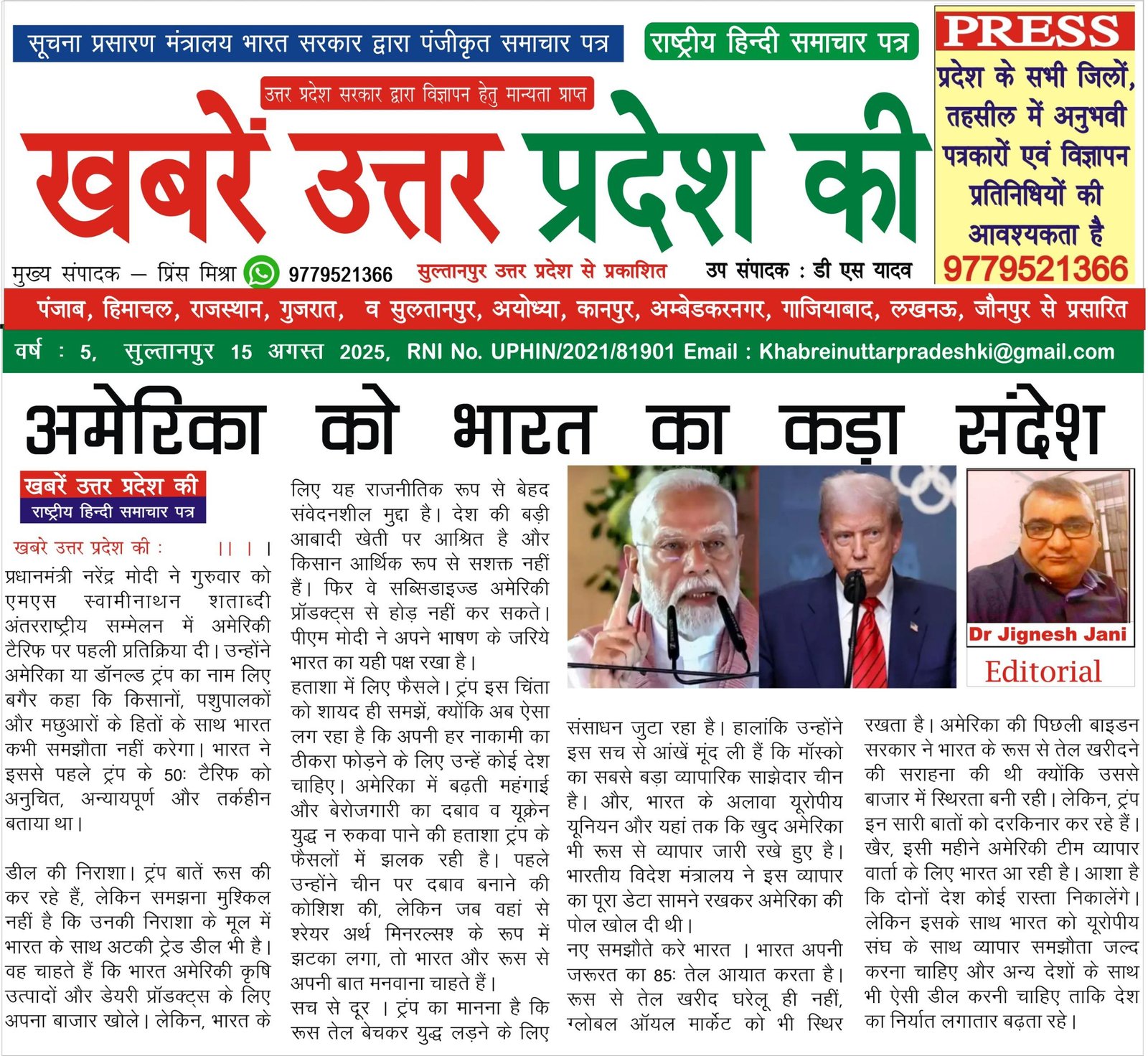
Discussing India–United States relations, Dr. Jani views the partnership as one of growing strategic importance in areas such as trade, technology, education, defence cooperation, healthcare, renewable energy, and innovation.

However, he also believes that healthy international partnerships require mutual respect for each country's national priorities. According to him, India's leadership has consistently emphasised that while expanding global trade remains important, the interests of Indian farmers, animal husbandry, small businesses, and domestic industries must also be protected.

In his view, successful trade negotiations should create opportunities for economic growth without compromising sectors that support millions of livelihoods. A balanced approach allows India to strengthen international partnerships while preserving domestic economic stability.

Expanding Global Economic Partnerships

Beyond bilateral relations, Dr. Jani believes India should continue expanding cooperation with countries across Asia, Europe, Africa, the Middle East, and other regions. Diversified economic partnerships help strengthen supply chains, encourage investment, promote technology transfer, and create new opportunities for Indian businesses.

He particularly recognises the importance of strengthening trade and economic cooperation with the European Union, believing that broader international engagement supports long-term economic resilience and sustainable development.

According to him, India's future lies in building partnerships based upon innovation, research, education, clean energy, digital technology, healthcare collaboration, and entrepreneurship rather than limiting cooperation to traditional sectors alone.

India as a Responsible Global Voice

Dr. Jani believes India's growing international influence also brings greater responsibility. As one of the world's largest democracies, India has the opportunity to contribute positively to discussions on climate change, sustainable development, public health, humanitarian assistance, disaster management, technological innovation, and global peace.

He believes India's civilisational philosophy of "Vasudhaiva Kutumbakam"—the world is one family—continues to remain relevant in today's interconnected world. This philosophy encourages cooperation without compromising sovereignty and promotes dialogue instead of confrontation.

For Dr. Jani, India's role should always combine confidence with responsibility—protecting national interests while contributing meaningfully towards global stability and shared progress.


Peace Is Stronger Than War – A Humanitarian Call for Global Harmony

Among the many principles that define Dr. Jignesh Ramanlal Jani's public life, perhaps none is more consistent than his unwavering belief that peace remains humanity's greatest achievement.

Living in an era where conflicts continue to affect millions of people across different parts of the world, Dr. Jani believes that every war carries consequences extending far beyond political disagreements or military objectives. Behind every conflict are ordinary families whose lives are disrupted, children whose futures become uncertain, communities that lose opportunities for development, and generations that inherit emotional, economic, and environmental challenges.

For this reason, he consistently advocates dialogue over violence, diplomacy over confrontation, and cooperation over conflict.

According to Dr. Jani, modern civilisation has achieved extraordinary progress in science, medicine, technology, education, and communication. Humanity has demonstrated its ability to solve complex challenges through collaboration and innovation. These achievements, he believes, should inspire nations to resolve differences through peaceful negotiation rather than prolonged confrontation.

He has publicly appealed to international leaders to support peaceful dialogue, humanitarian cooperation, and ceasefires wherever possible, emphasising that protecting human life should remain the highest priority in every international decision.

His message is not directed towards supporting one nation over another. Instead, it reflects a universal humanitarian principle—that every innocent life possesses equal value regardless of nationality, religion, language, or geographical location.

According to Dr. Jani, true leadership is demonstrated not only through defending national interests but also through preventing unnecessary human suffering whenever peaceful solutions remain possible.

He often reminds audiences that humanity today faces challenges which no country can solve alone. Climate change, environmental sustainability, healthcare, food security, scientific research, clean energy, technological advancement, disaster management, and education all require cooperation that extends beyond borders.

For him, investing greater global attention towards these shared priorities offers far greater benefits than allowing prolonged conflicts to consume valuable human and natural resources.

His vision is ultimately one of optimism. Rather than viewing the future through the lens of division, he believes humanity possesses extraordinary capacity to build a more peaceful, innovative, and compassionate world through mutual respect, responsible leadership, and international collaboration.

This philosophy is beautifully reflected in the message that has become closely associated with his humanitarian outlook:

"One Earth. One Humanity. One Shared Future."

whatsapp-image-2026-08-04-at-104447-am.jpeg

For Dr. Jignesh Ramanlal Jani, these words are not simply an aspiration—they are a roadmap towards a world where peace, dignity, cooperation, and hope become humanity's greatest shared achievements.


Building a Better Tomorrow – A Global Vision of Unity, Peace and Shared Progress

The future of humanity will not be determined solely by economic growth, technological innovation, or political influence. It will be shaped by the choices people make every day—whether they choose cooperation over conflict, compassion over indifference, responsibility over selfishness, and hope over fear. This philosophy lies at the heart of Dr. Jignesh Ramanlal Jani's vision for a better tomorrow.

According to Dr. Jani, humanity has entered an extraordinary period of history. Never before have people been so deeply connected through technology, education, science, commerce, and communication. Information now travels across continents within seconds. Medical discoveries developed in one nation benefit patients worldwide. Scientific collaboration allows researchers to solve problems that no single country could address alone. Businesses operate globally, students study internationally, and communities learn from one another regardless of geographical boundaries.

Yet despite these remarkable achievements, the world continues to face challenges that require collective wisdom rather than individual ambition.

Climate change, environmental degradation, public health crises, food security, water conservation, poverty, sustainable development, and technological ethics are not challenges belonging to one nation—they are shared responsibilities of humanity.

Dr. Jani believes these global challenges should inspire greater international cooperation instead of deeper division.

He often reminds people that while countries may differ politically, economically, or culturally, every nation ultimately shares similar aspirations. Parents everywhere wish for safe families. Children everywhere deserve quality education. Communities everywhere seek peace, employment, healthcare, opportunity, and dignity. These shared aspirations form the common foundation upon which a stronger future can be built.

According to him, peace creates the environment in which every other form of progress becomes possible.

When societies remain peaceful, schools educate future generations, scientists develop life-saving innovations, entrepreneurs create employment, artists preserve culture, healthcare professionals improve lives, and governments invest in long-term development rather than emergency response.

Peace therefore becomes not merely the absence of war, but the presence of opportunity.

Dr. Jani also believes that education remains humanity's greatest investment.

Every classroom has the potential to produce future doctors, engineers, teachers, scientists, judges, entrepreneurs, artists, innovators, and responsible citizens. Beyond professional knowledge, education develops ethical thinking, compassion, discipline, critical reasoning, and constitutional awareness. A well-educated society becomes better equipped to solve complex problems while protecting democratic values and social harmony.

Equally important is responsible innovation.

Modern technology has transformed healthcare, communication, transportation, agriculture, education, finance, and countless other sectors. Artificial Intelligence, digital platforms, scientific research, renewable energy, and automation possess enormous potential to improve quality of life when developed responsibly. According to Dr. Jani, innovation should always serve humanity rather than replace humanity's ethical responsibilities.

He also places considerable emphasis on environmental stewardship.

Natural resources are not inherited permanently by one generation—they are borrowed from future generations. Forests, rivers, clean air, biodiversity, fertile land, and oceans represent humanity's shared responsibility. Sustainable development therefore requires balancing economic growth with environmental protection so that future generations inherit a healthier planet.

Businesses also occupy an important place within his vision.

According to Dr. Jani, responsible entrepreneurship extends beyond profitability. Ethical businesses create employment, encourage innovation, support local communities, contribute through Corporate Social Responsibility, promote environmental sustainability, and strengthen national development. Organisations that operate with integrity inspire confidence while creating opportunities that benefit society as a whole.

Another principle repeatedly emphasised by Dr. Jani is the celebration of diversity.

Human civilisation has flourished because of its diversity of languages, traditions, cultures, religions, ideas, and perspectives. Rather than becoming sources of division, these differences should become opportunities for mutual learning and cooperation. Respect for diversity encourages creativity, innovation, tolerance, and stronger international relationships built upon understanding rather than prejudice.

He also believes that meaningful transformation begins with individuals.

Many people assume positive change requires extraordinary resources or powerful positions. Dr. Jani disagrees.

According to him, history demonstrates that remarkable movements often begin with ordinary individuals making extraordinary decisions.

A teacher inspiring one student.

A doctor treating one patient with compassion.

A volunteer helping one family.

A young entrepreneur creating employment.

A citizen planting one tree.

A professional mentoring one child.

A neighbour supporting another during difficult times.

These seemingly small actions gradually create larger social movements capable of transforming entire communities.

For this reason, Dr. Jani consistently encourages volunteerism, community participation, ethical leadership, environmental responsibility, humanitarian service, and active citizenship.

He believes no contribution is too small when performed with sincerity.

As the world becomes increasingly interconnected, Dr. Jani hopes future generations will inherit not merely stronger economies, but stronger values.

A world where scientific advancement is guided by ethics.

Where education produces responsible citizens.

Where businesses create shared prosperity.

Where technology strengthens humanity.

Where governments cooperate on global challenges.

Where diversity becomes a source of strength.

Where peace remains the foundation upon which every nation builds its future.

This vision is beautifully summarised through the message that has become synonymous with Dr. Jignesh Ramanlal Jani's humanitarian philosophy:

"One Earth. One Humanity. One Shared Future."

For him, these words represent more than an idealistic aspiration. They describe a practical roadmap for the twenty-first century—a future where collaboration replaces confrontation, compassion overcomes division, knowledge empowers society, and humanity recognises that its greatest achievements will always be those accomplished together.

Because, in the end, civilizations are remembered not only for the wealth they created or the technologies they invented, but for the values they upheld and the humanity they preserved.

And according to Dr. Jignesh Ramanlal Jani, the greatest legacy any generation can leave behind is a world that is more peaceful, more compassionate, more educated, more sustainable, and more united than the one it inherited.

Recognition, Honors & A Life of Purpose

Recognition often follows those who dedicate themselves to serving society with sincerity and consistency. While many people pursue awards as milestones of success, Dr. Jignesh Ramanlal Jani believes that the greatest honour any individual can receive is the trust of the people they serve. Every family supported, every community strengthened, and every life positively influenced carries greater meaning than any certificate or public recognition.

Nevertheless, his years of commitment towards human rights, community welfare, Corporate Social Responsibility (CSR), disaster relief, humanitarian service, and public awareness have earned appreciation from various organisations and social institutions. These recognitions acknowledge not only his professional contributions but also his dedication to promoting compassion, constitutional values, ethical leadership, and responsible citizenship.

Among the most significant recognitions in his journey is the Honorary Doctorate, conferred in appreciation of his outstanding contribution to social service, human rights advocacy, and community welfare. Rather than viewing this honour as the culmination of his work, Dr. Jani considers it an encouragement to continue serving society with even greater responsibility and commitment.

He firmly believes that awards should inspire individuals to increase their contribution rather than become satisfied with past achievements. Recognition, according to him, carries with it a moral responsibility to continue creating positive impact while remaining humble, ethical, and dedicated to public welfare.

Throughout his journey, Dr. Jani has never measured success by the number of awards received. Instead, he measures it through the confidence people place in him, the communities that continue to benefit from humanitarian initiatives, and the growing awareness surrounding constitutional values, peace, and social responsibility.

His recognition also reflects an important message for younger generations. Meaningful achievements are rarely created overnight. They emerge through years of patience, consistency, honesty, discipline, and unwavering dedication to one's purpose. Every small act of service eventually contributes to a larger legacy that extends beyond personal recognition.

For Dr. Jignesh Ramanlal Jani, honours are not destinations—they are reminders that society expects continued leadership, continued compassion, and continued commitment towards building a better future.


FlexiMaps Exclusive Interview with Dr. Jignesh Ramanlal Jani

"Humanity becomes stronger when compassion becomes a habit rather than an occasional act."

Q1. What inspired you to dedicate your life to social service and humanitarian work?

Dr. Jignesh Jani:

Since my student days, I have believed in honesty, justice, and fairness. As I grew older, I realised that these values become meaningful only when they are translated into action. Helping society has never been a profession for me—it has always been a responsibility.


Q2. What does humanitarian service mean to you?

Dr. Jani:

Humanitarian service means standing beside people during their most difficult moments without expecting recognition in return. Every individual deserves dignity, respect, and an opportunity to live with hope. If our actions improve even one life, they create value for society.


Q3. You often speak about "Nation First." What does this principle mean?

Dr. Jani:

Nation First is much more than a slogan. It means placing the country's progress above personal interests. Education, discipline, constitutional awareness, ethical conduct, and responsible citizenship together create a stronger nation. Patriotism is demonstrated through actions, not merely words.


Q4. What role does education play in nation building?

Dr. Jani:

Education creates informed citizens who understand both their rights and responsibilities. A nation becomes stronger when its people think critically, respect democratic institutions, and contribute positively to society. Education is one of the greatest investments any country can make.


Q5. What is your message regarding democracy and Parliament?

Dr. Jani:

Democracy becomes stronger through dialogue. Governments and opposition parties both have constitutional responsibilities. Parliament remains the most appropriate platform for discussing national issues with facts, reason, and mutual respect. Constructive debate strengthens democracy.


Q6. How should society respond to corruption?

Dr. Jani:

Transparency, accountability, ethical leadership, and public awareness are essential. Every citizen has a role in creating an honest society. Fighting corruption begins with individual integrity.


Q7. Why do you consistently advocate peace?

Dr. Jani:

Because every war ultimately affects ordinary people. Peace creates opportunities for education, healthcare, innovation, economic development, and environmental protection. Dialogue should always be preferred whenever peaceful solutions remain possible.


Q8. What message would you like to share with world leaders?

Dr. Jani:

Protect human life above everything else. Strengthen diplomacy, encourage dialogue, support humanitarian efforts, and work together on shared global challenges such as climate change, healthcare, education, and sustainable development. Humanity's future depends upon cooperation.


Q9. What are your thoughts on Gujarat's development?

Dr. Jani:

Gujarat demonstrates how agriculture, industry, infrastructure, education, technology, and entrepreneurship can collectively contribute to balanced development. Every state has unique strengths, and together they contribute to India's progress.


Q10. Finally, what message would you like to leave for future generations?

Dr. Jani:

Never underestimate the power of one positive action. Help someone. Respect the Constitution. Protect nature. Continue learning. Serve your nation honestly. Build bridges rather than walls.

Remember always:

"One Earth. One Humanity. One Shared Future."

Why FlexiMaps Recommends Dr. Jignesh Ramanlal Jani

At FlexiMaps, we believe every story we publish should inspire readers, create awareness, and contribute positively to society. While entrepreneurship, innovation, and business excellence remain central to our platform, we also recognise individuals whose work extends beyond professional success and creates meaningful impact through service, leadership, and humanitarian values.

After understanding the journey of Dr. Jignesh Ramanlal Jani, the FlexiMaps Editorial Team found a personality whose life's work is built upon principles that remain timeless—honesty, constitutional values, human dignity, social responsibility, peace, and nation building.

What distinguishes Dr. Jani is not merely his years of humanitarian service but the consistency with which he has continued serving society. From his early commitment to justice and fairness, through his professional experience with Larsen & Toubro, to decades of involvement in Corporate Social Responsibility (CSR), community welfare, disaster relief, human rights awareness, medical assistance, anti-corruption initiatives, and public service, his journey reflects a sustained dedication towards improving the lives of others.

The Editorial Team particularly appreciated his balanced perspective on democracy. His belief that Parliament remains the strongest constitutional platform for discussion, debate, accountability, and policy-making reflects respect for democratic institutions while encouraging constructive dialogue over confrontation. His emphasis on constitutional values reminds citizens that democracy flourishes not only through rights but also through responsibility.

Equally inspiring is Dr. Jani's understanding of "Nation First." Rather than reducing patriotism to slogans, he defines national service through education, discipline, ethical conduct, responsible citizenship, constitutional awareness, and active contribution towards society. This practical interpretation encourages individuals to strengthen the nation through everyday actions rather than symbolic expressions alone.

His humanitarian philosophy also extends beyond national boundaries. At a time when global tensions continue to challenge peace and stability, Dr. Jani consistently advocates dialogue over conflict, diplomacy over violence, and cooperation over division. His vision reminds us that humanity shares common aspirations regardless of geographical borders, political systems, or cultural differences.

The message "One Earth. One Humanity. One Shared Future." captures the essence of his work. It encourages people to recognise that lasting progress depends upon education, environmental responsibility, healthcare, innovation, ethical leadership, sustainable development, and international cooperation rather than conflict or division.

The FlexiMaps Editorial Team also recognises Dr. Jani's efforts to promote human rights awareness with dignity and inclusiveness. His work consistently emphasises that every individual deserves respect regardless of religion, language, caste, economic background, or social status. By encouraging compassion alongside constitutional values, he contributes towards building stronger and more harmonious communities.

Another noteworthy aspect of his journey is his belief that positive social change begins with individual responsibility. Throughout our interaction, one message repeatedly emerged—every citizen possesses the capacity to create meaningful change. Whether through education, volunteerism, ethical leadership, environmental stewardship, community participation, or simple acts of kindness, every contribution strengthens society.

In an age where success is often measured through wealth or public recognition, Dr. Jani reminds us that true leadership is measured by service. His life demonstrates that meaningful influence is created through integrity, compassion, patience, and consistent dedication rather than publicity alone.

For these reasons, FlexiMaps proudly recognises Dr. Jignesh Ramanlal Jani as a humanitarian, human rights advocate, CSR professional, and responsible citizen whose work continues to inspire positive social transformation. His journey reflects the values of responsible leadership, constitutional awareness, community welfare, and peaceful coexistence that remain essential for building stronger societies.

As India continues its journey towards becoming a developed nation, personalities like Dr. Jani remind us that sustainable progress depends not only upon economic growth but also upon ethical leadership, educated citizens, humanitarian values, and collective responsibility.


Contact Information

Dr. Jignesh Ramanlal Jani

Profession: Humanitarian | CSR Professional | Human Rights Advocate | Corporate Affairs Consultant | Social Worker | Freelance Writer

Location: Gujarat, India

Education: B.Sc., LL.M.

Phone: +91 99789 82537

Recognition: Honorary Doctorate for Contributions to Social Service, Human Rights & Community Welfare

Core Areas of Work:

  • Corporate Social Responsibility (CSR)
  • Human Rights Advocacy
  • Community Welfare
  • Disaster Relief
  • Medical Assistance
  • Anti-Corruption Awareness
  • Constitutional Values
  • Nation Building
  • Peace Advocacy
  • Public Welfare

FlexiMaps Editorial Note

At FlexiMaps, we believe that development is not measured only by industries, infrastructure, or financial success. It is equally measured by the strength of our values, the compassion of our communities, and the willingness of individuals to serve others without expecting recognition.

Dr. Jignesh Ramanlal Jani's journey reminds us that meaningful leadership begins with responsibility. Through decades of humanitarian work, CSR initiatives, human rights advocacy, public welfare, and constitutional awareness, he has demonstrated that lasting change is created through consistent action rather than occasional effort.

His philosophy encourages every citizen to become an active participant in nation building by embracing education, integrity, ethical leadership, environmental responsibility, democratic values, and community service. At the same time, his global message of peace, dialogue, and cooperation reminds us that humanity's greatest achievements are realised when people choose understanding over conflict and collaboration over division.

As we conclude this feature, one message stands above all others:

Nations become stronger when citizens become more responsible. Communities become stronger when people care for one another. Humanity becomes stronger when compassion guides every decision.

Dr. Jignesh Ramanlal Jani's life reflects this philosophy with sincerity and consistency.

From everyone at FlexiMaps, we extend our appreciation for his continued contribution to society and wish him success in his ongoing mission of promoting human rights, constitutional values, peace, responsible citizenship, and humanitarian service.

Because the future is built not only by those who dream of change—but by those who dedicate their lives to creating it.

One Earth. One Humanity. One Shared Future.

Priya Kapoor

Priya Kapoor

I am Priya Kapoor, an author at Fleximaps News, where I write local business spotlight stories and cover inspiring entrepreneurs from across India.