• Mon, Aug 2026

At FlexiMaps, we believe that every individual has a story worth discovering—not only through achievements, but through the ideas, experiences and purpose that shape their journey. Our conversation with Pawan Verma, a young Fine Artist from Jhansi, Uttar Pradesh, took us into the world of visual storytelling, historical memory and artistic expression.

Pawan Verma: The Young Artist Turning History, Heritage and Contemporary India Into Visual Stories

Fine Artist • Visual Storyteller • Historical & Cultural Artist

At FlexiMaps, we believe that every individual has a story worth discovering—not only through achievements, but through the ideas, experiences and purpose that shape their journey.

Our conversation with Pawan Verma, a young Fine Artist from Jhansi, Uttar Pradesh, took us into the world of visual storytelling, historical memory and artistic expression.

At just 22 years of age, Pawan has, according to the information supplied to FlexiMaps, spent more than 12 years developing his artistic practice and created more than 700 artworks.

His work explores fine art, modern art, oil-based art, sketching, Madhubani art, Mandala art and Chittri Kala, while his subjects range from India's historical heritage to national events, environmental concerns and contemporary social themes.

But one project particularly defines the historical dimension of his journey—the creation of 70 artworks depicting the life journey of Rani Laxmibai of Jhansi.

For FlexiMaps, we explored the person behind these artworks, his connection with history, his artistic philosophy and his vision for the future.


FlexiMaps:Pawan, you started your artistic journey at a very young age. What made you continue with art for so many years?

Pawan Verma:

"Art gradually became an important part of my life.

When I started, I was learning and experimenting.

As I continued, I understood that art could communicate much more than an image.

It can communicate history.

It can communicate culture.

It can communicate emotions.

It can also create awareness.

That understanding encouraged me to continue learning and exploring different forms of art."


FROM EARLY INTEREST TO A SERIOUS ARTISTIC JOURNEY

More than a decade of artistic practice has given Pawan the opportunity to experiment with different approaches.

His supplied profile records experience across several areas of visual art, including:

Fine Art

Modern Art

Oil-based Art

Sketching

Madhubani Art

Mandala Art

Chittri Kala

Rather than limiting his work to one particular form, Pawan has explored different artistic languages depending on the subject he wants to communicate.


FlexiMaps:Why do you work across different forms instead of following only one style?

Pawan Verma:

"Every subject is different.

Sometimes a subject needs detailed representation.

Sometimes it needs a modern approach.

Sometimes traditional forms are more appropriate.

I enjoy learning different techniques because each one teaches me something.

I believe an artist should keep learning rather than stop at one method."


WHEN HISTORY BECAME A VISUAL JOURNEY

For an artist from Jhansi, the story of Rani Laxmibai carries a particularly powerful connection.

Pawan's major artistic project involved creating 70 artworks depicting different aspects of Rani Laxmibai's life journey.

According to the supplied record documentation, the works were created on A4-size sheets, with the achievement dated 19 November 2020 in Jhansi.

The supplied documentation identifies the achievement as:

“Maximum Paintings Made to Depict Rani Laxmi Bai's Life Journey”

For Pawan, the project became an opportunity to approach history through a sequence of visual narratives rather than a single representation.


FlexiMaps:Why did you decide to create 70 artworks around Rani Laxmibai?

Pawan Verma:

"Rani Laxmibai is an important part of Jhansi's history.

Her life represents courage, determination and sacrifice.

I wanted to explore her journey through multiple artworks.

One artwork can show one moment.

Another can show another part of the story.

When they come together, they create a larger visual narrative.

That was the idea behind the series."


70 ARTWORKS — ONE HISTORICAL STORY

The project required more than artistic ability.

It demanded consistency.

It required patience.

It required the ability to remain focused on one historical subject across an extended series.

The result was a collection designed around a single historical narrative.

For Pawan, this experience also became an important lesson in discipline.


FlexiMaps:What did the 70-artwork project teach you personally?

Pawan Verma:

"It taught me patience.

When you work on one artwork, you can concentrate on that individual piece.

When you create a series, you have to think about the complete story.

You have to maintain concentration and continue working.

It taught me that artistic inspiration is important, but discipline is equally important."


THE 1857 MOVEMENT THROUGH VISUAL STORYTELLING

Pawan's interest in history extends beyond Rani Laxmibai.

His supplied profile describes artworks connected with the 1857 uprising and India's struggle for independence, covering historical locations and events associated with:

Delhi

Kanpur

Lucknow

Agra

Meerut

Jhansi

Gwalior

Through these works, history becomes a visual narrative.

The paintings provide an artistic interpretation of people, places and events associated with a significant period in India's history.


FlexiMaps:What attracts you to historical subjects?

Pawan Verma:

"History contains stories that should continue to be remembered.

There are people who made sacrifices.

There are events that changed the course of the country.

Art can create another way for people to connect with those stories.

If someone sees an artwork and becomes interested in learning more about the history behind it, that is meaningful to me."


THE ARTIST FROM JHANSI

Jhansi is an important part of Pawan's artistic identity.

The city's historical association with Rani Laxmibai provides a natural connection to his interest in Indian history.

But his artistic ambitions are broader.

He has also explored environmental themes, contemporary events, cultural traditions and modern-art concepts.

His work therefore moves between the historical and the contemporary.

Between heritage and current issues.

Between traditional forms and modern expression.


FlexiMaps:How has Jhansi influenced you as an artist?

Pawan Verma:

"Jhansi has definitely influenced me.

The history of this place is very strong.

Growing up here gives you an understanding of the importance of Rani Laxmibai and the history connected with Jhansi.

But I also want to explore subjects beyond history.

I want to continue learning and create work on different themes."


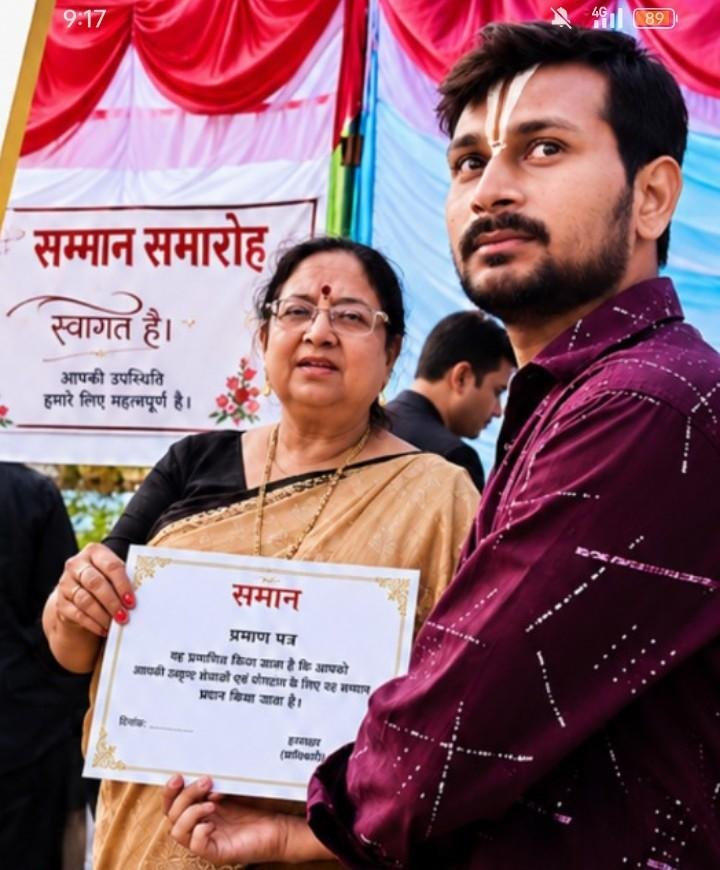
Mrs. Baby rani maurya ji Cabinet ministers Uttar Pradesh

ART THAT RESPONDS TO INDIA'S PRESENT

Pawan's artistic work also responds to contemporary national and social subjects.

His supplied profile highlights artwork associated with:

  • The Pulwama attack
  • Swachh Bharat
  • Swachh Ganga
  • Environmental conservation
  • COVID-19

These subjects demonstrate another side of his practice.

The artist is not only looking into the past.

He is also observing the present.


REMEMBERING THROUGH ART

Pawan created an artwork based on the Pulwama attack, focusing on the sacrifice of soldiers and the emotional impact of the tragedy.

Such a subject requires a different artistic approach from historical storytelling.

It deals with collective memory and contemporary emotion.

For Pawan, art becomes a way to express the significance of an event while maintaining respect for its seriousness.


FlexiMaps:What responsibility does an artist have when working with sensitive subjects?

Pawan Verma:

"The subject should always be treated with sensitivity.

When you are creating something about sacrifice or tragedy, you should understand the importance of the subject.

The purpose should not simply be to create an emotional reaction.

There should be respect for the people and the event being represented.

Art should communicate, but it should also maintain dignity."


WHEN ART CREATES AWARENESS

Pawan's work around Swachh Bharat and Swachh Ganga explores cleanliness, environmental responsibility and conservation through modern art.

His environmental artworks also focus on the importance of protecting trees and preserving nature.

This reflects his belief that art can become a vehicle for ideas.

A visual message can remain in a person's mind in a different way from a written message.


FlexiMaps:Can art actually influence society?

Pawan Verma:

"Art cannot solve every problem.

But it can create awareness.

It can make people stop and think.

If someone sees an artwork about the environment and begins thinking about the importance of nature, that is already a positive response.

Artists can contribute by communicating ideas through their own form of expression."


FROM TRADITION TO MODERN EXPRESSION

Pawan's interest in Madhubani art, Mandala art and Chittri Kala connects his practice with traditional and cultural forms.

At the same time, his modern-art works demonstrate his interest in contemporary visual expression.

This combination allows him to explore different dimensions of Indian artistic culture.

For a young artist, learning traditional forms can also provide a deeper understanding of patterns, symbolism, composition and cultural heritage.


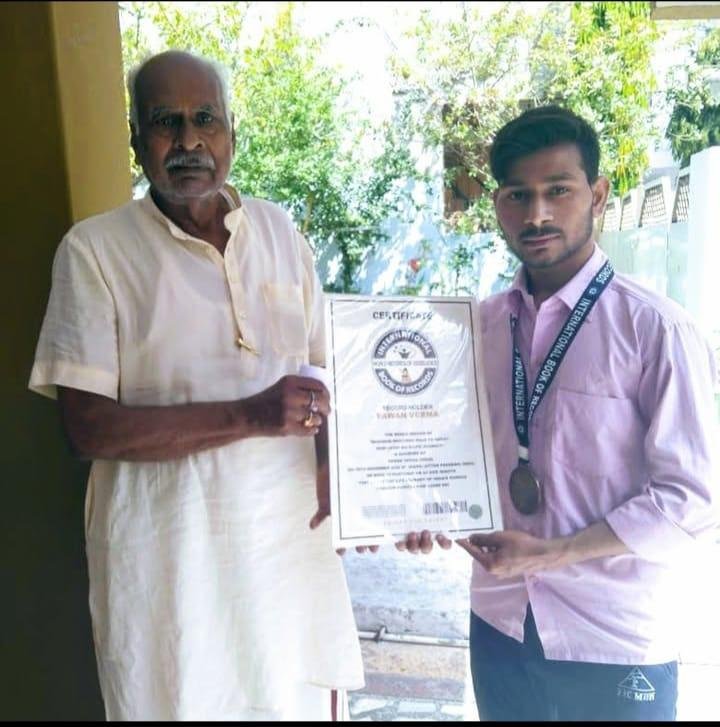
My guruji international book of record world record of excellence detey huye

FlexiMaps:Why is it important for young artists to understand traditional art?

Pawan Verma:

"Traditional art carries cultural knowledge.

There are stories and ideas behind the techniques.

Learning these forms gives you an understanding of where many artistic traditions come from.

At the same time, an artist can experiment and develop new approaches.

I think tradition and modern expression can exist together."


THE EXPERIENCE OF EXHIBITING ART

Pawan's supplied profile records participation in exhibitions, workshops and seminars from 2018 through 2025.

His listed experiences include solo exhibitions at Rajkiya Sangrahalaya, Jhansi, participation in government-related exhibitions and workshops, and a seminar associated with the Government of India.

These experiences provide an important part of an artist's development.

A studio allows creation.

An exhibition creates interaction.

The artist sees how viewers respond to the work.

Different people notice different elements.

Some ask questions.

Others interpret the subject differently.

That interaction can influence an artist's future thinking.


RECOGNITION ALONG THE JOURNEY

Pawan's supplied documentation lists several awards and recognitions between 2021 and 2025.

These include:

Indian Star Icon Kids Achievers Award — 2021

International Book of Records – World Record of Excellence — 2021

Associated in the supplied material with his Rani Laxmibai artistic achievement.

Exclusive World Record — 2021

Associated in the supplied material with his modern-art work based on Swachh Bharat and Swachh Ganga.

International Icon Award — 2024

International Appreciation Artist Award — 2025

Top 10 International Rising Star Award Winner — 2025

These recognitions represent milestones in his developing artistic journey.


FlexiMaps:What does recognition mean to you?

Pawan Verma:

"Recognition gives motivation.

It tells you that people have noticed your work.

But an award cannot be the final goal.

After one recognition, you still have another artwork to create.

You still have to learn.

You still have to improve.

For me, the artistic journey continues."


700+ ARTWORKS AND STILL CREATING

According to the supplied profile, Pawan has created more than 700 artworks.

For a 22-year-old artist, this represents a substantial body of creative work.

But the number is only one part of the story.

The more significant aspect is the variety of subjects and artistic approaches represented in his journey.

Historical figures.

Freedom movements.

National events.

Environmental issues.

Cultural traditions.

Contemporary experiences.

Each subject has provided another opportunity to explore visual expression.


FlexiMaps:After creating hundreds of artworks, what still motivates you to pick up a new subject?

Pawan Verma:

"There are always new things to explore.

One subject finishes, but another idea comes.

Sometimes I see something in history.

Sometimes something happening around us creates an idea.

Sometimes I want to experiment with a technique.

As long as there are things to observe and questions to explore, there will be reasons to create."


THE FUTURE OF PAWAN VERMA

At 22, Pawan's artistic identity is still evolving.

His early years have already produced a substantial body of work, but the future offers an even larger space for experimentation.

New subjects.

New techniques.

New exhibitions.

New cultural explorations.

New contemporary themes.

The next stage of his career will be about continuing to develop an individual artistic voice while retaining the subjects that have shaped his journey.


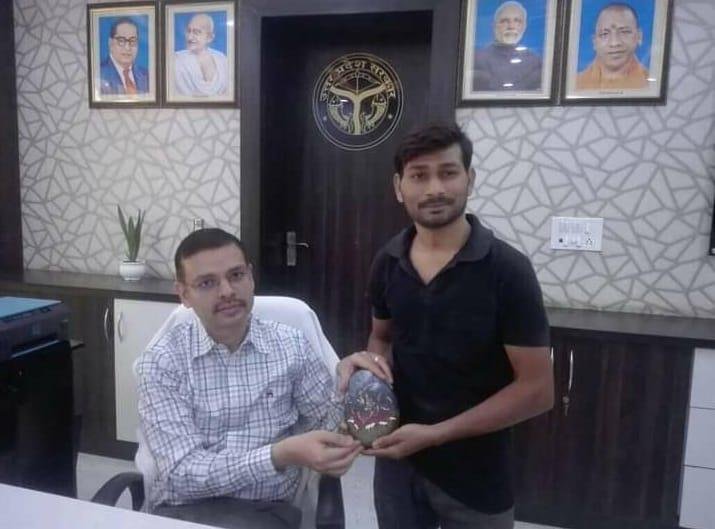
jhasi joint commissioner

FlexiMaps:What do you want your art to be remembered for?

Pawan Verma:

"I want people to remember that my work had meaning.

I want the artworks to tell stories.

I want people to connect with history and culture.

I also want my work to communicate important contemporary subjects.

If someone looks at an artwork and feels something, remembers something or becomes curious about something, then I feel the artwork has value."


THE FLEXIMAPS PERSPECTIVE

Our conversation with Pawan Verma revealed an artist whose journey is closely connected with storytelling.

His work does not remain within one artistic category.

It moves between historical memory and contemporary society.

Between cultural heritage and modern expression.

Between national events and environmental awareness.

His 70-artwork Rani Laxmibai series stands as one of the most significant projects highlighted in his supplied profile, while his wider body of 700+ artworks demonstrates the breadth of his continuing artistic practice.

For Pawan, art is not simply about creating an image.

It is about creating a connection.

A connection with history.

A connection with culture.

A connection with an idea.

A connection with an emotion.

And sometimes, a connection between generations.


A BLANK CANVAS IS ALWAYS THE BEGINNING

The most interesting part of Pawan Verma's story may be that it is still being written.

The awards are milestones.

The exhibitions are experiences.

The 70-artwork Rani Laxmibai series is a significant chapter.

The 700+ artworks represent years of practice.

But every new artwork begins with the same thing:

a blank space.

And within that blank space is another opportunity to preserve a story, express an idea or create something that did not exist before.

At 22, Pawan Verma is continuing that journey.

Not simply as someone who creates artworks, but as a Fine Artist developing his own visual language and perspective.

Pawan Verma

Fine Artist • Visual Storyteller • Historical & Cultural Artist

Jhansi, Uttar Pradesh, India

12+ Years of Artistic Experience | 700+ Artworks Stated in Supplied Profile | 70-Artwork Rani Laxmibai Series

— Team FlexiMaps


Priya Kapoor

Priya Kapoor

I am Priya Kapoor, an author at Fleximaps News, where I write local business spotlight stories and cover inspiring entrepreneurs from across India.