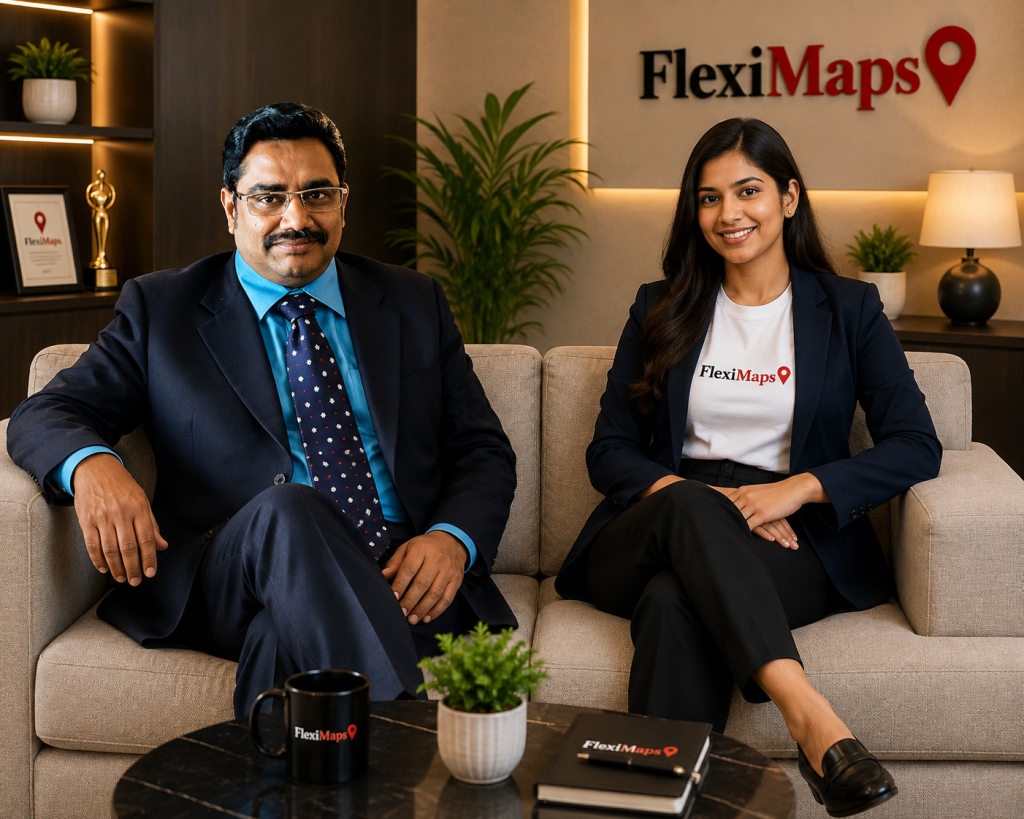
“We Nurture and Transform”: Building Competent, Responsible and Future-Ready Seafarers
An Exclusive FlexiMaps Conversation with Rtn. Dr. K. V. R. Srinivas, Managing Director, Sri Chakra Maritime College
FlexiMaps | The Entrepreneurs of India
Maritime education is not simply about learning how ships operate. It is about preparing individuals to take responsibility in environments where competence, discipline, judgement and safety can directly influence lives.
For Rtn. Dr. K. V. R. Srinivas, Managing Director of Sri Chakra Maritime College, the purpose of maritime education extends even further: to shape responsible global citizens who can build meaningful careers while carrying the values of professionalism, leadership and respect for the sea.
With the institution's philosophy of “We Nurture and Transform,” Sri Chakra Maritime College places emphasis on academic knowledge, practical competence, emotional intelligence, discipline, values and professional confidence.
In this exclusive conversation with FlexiMaps, Dr. Srinivas shares his perspective on maritime education, GP Rating, practical and simulator-based training, faculty experience, student development, career guidance, safety, regulatory compliance and the future of maritime professionals.
1. What does maritime education mean to you?
Rtn. Dr. K. V. R. Srinivas:
To me, maritime education is much more than learning about ships, navigation or marine engineering.
It is about shaping responsible global citizens and professionals who can make sound decisions in a demanding environment.
Maritime education combines knowledge, discipline, safety, attitude, leadership and respect for the sea.
Ultimately, it prepares a young person not just for a job at sea, but for a meaningful maritime career.
2. What is the educational philosophy of Sri Chakra Maritime College?
Rtn. Dr. K. V. R. Srinivas:
At Sri Chakra Maritime College, we believe “We Nurture and Transform.”
Our philosophy is to combine strong academic foundations with practical skills, discipline, values and professional confidence.
We want every student to understand not only what to do, but why it matters.
Our aim is to create competent seafarers with character, responsibility and a passion to grow.
We also strongly believe in EQ along with IQ for seafarers.
Technical knowledge is important, but emotional intelligence, communication, teamwork, self-control and the ability to work responsibly with others are equally valuable in a maritime environment.
3. Why is practical training so important for aspiring seafarers?
Rtn. Dr. K. V. R. Srinivas:
The sea is a real workplace where knowledge must translate into action, often under pressure.
Practical training and simulator-based training allow students to experience machinery, equipment, procedures, teamwork and emergency situations before they step onboard.
It builds confidence, develops judgement and makes safety a natural habit.
For a seafarer, competence is not just knowing — it is knowing how to perform when it matters.
4. GP Rating is one of your major programmes. What makes it important?
Rtn. Dr. K. V. R. Srinivas:
GP Rating provides young aspirants with a strong foundation for entering the merchant navy and building a career at sea.
It gives students exposure to both deck and engine operations, along with seamanship, safety, discipline and teamwork.
More importantly, it can open pathways for further competency development and career progression in the maritime industry.
GP Rating can provide a foundation for aspiring professionals who may subsequently pursue career pathways towards Deck Officer, Marine Engineer or Electro-Technical Officer roles, subject to the applicable qualifications, certifications and progression requirements.
At Sri Chakra, we see GP Rating not merely as a course, but as the first step in transforming a young aspirant into a professional seafarer.
5. What should a student understand before choosing a maritime career?
Rtn. Dr. K. V. R. Srinivas:
A maritime career is exciting and rewarding, but it also demands discipline, resilience and a strong sense of responsibility.
Students should understand that life at sea is different from a conventional career, with long periods away from family and challenging working conditions.
They should have the right attitude, physical fitness and willingness to learn continuously.
Most importantly, they should choose the sea because they genuinely want to sail, not simply because it appears to offer a good career.
A maritime career requires commitment, and students should enter it with realistic expectations.
6. How important is faculty experience in maritime education?
Rtn. Dr. K. V. R. Srinivas:
In maritime education, experience makes a significant difference because the sea cannot be understood completely from textbooks alone.
Experienced faculty bring real situations, practical lessons and professional judgement into the classroom.
They help students connect theory with what actually happens onboard a ship.
For us, good teaching is not only about completing a syllabus. It is about preparing students for real responsibility at sea.
7. Your faculty includes professionals with decades of sea experience. How does that benefit students?
Rtn. Dr. K. V. R. Srinivas:
Our experienced faculty bring the voice and wisdom of the sea directly into the classroom.
They share lessons from real voyages, machinery failures, emergencies, teamwork and decision-making onboard.
Students therefore learn not only technical knowledge, but also the mindset required of a professional seafarer.
This practical exposure helps students approach their first ship with greater confidence, awareness and maturity.
8. How does the college approach student evaluation?
Rtn. Dr. K. V. R. Srinivas:
We believe evaluation should measure more than a student's ability to remember answers.
We check Emotional Quotient in addition to IQ.
Our approach looks at knowledge, practical competence, discipline, communication, teamwork and professional attitude.
Continuous assessment helps us identify strengths as well as areas where a student needs additional support.
The objective is not simply to produce marks. It is to ensure that every student is genuinely prepared for life and responsibility at sea.
9. What role does career guidance play in maritime education?
Rtn. Dr. K. V. R. Srinivas:
Choosing the right maritime pathway can shape a student's entire professional life, so guidance is extremely important.
Students need to understand the different career routes, qualifications, costs, opportunities and responsibilities before making a decision.
We try to help students and parents make informed choices rather than follow a trend or hearsay.
Good career guidance gives a student not just a destination, but a clear direction for the journey ahead.
10. The college also highlights individual student care. Why is that important?
Rtn. Dr. K. V. R. Srinivas:
Every student comes with a different background, personality, learning ability and aspiration.
We believe a student should never feel like just another number in a classroom.
Individual attention helps us recognise challenges early, build confidence and bring out each student's potential.
When students feel supported and valued, they learn better, grow faster and become more responsible professionals.
At Sri Chakra, we are proud of our stated record of achieving national first through seventh ranks on multiple occasions, along with 100% results in every exit examination, as represented in our institutional information.
These outcomes reinforce our belief in combining academic preparation with individual student support.
11. What is the significance of STCW training?
Rtn. Dr. K. V. R. Srinivas:
STCW training provides the essential international foundation for safety, competence and professionalism among seafarers.
It prepares students to respond correctly to emergencies, work safely onboard and understand their responsibilities as part of a ship's crew.
It is not merely a certification requirement. It develops habits that can protect lives and prevent accidents.
For every aspiring seafarer, STCW is one of the first important steps towards becoming a safe and competent maritime professional.
12. Sri Chakra Maritime College also offers OCCP, ADNS, DNS and TME. Who are these programmes for?
Rtn. Dr. K. V. R. Srinivas:
These programmes are designed for students who want to build a serious and long-term career in the maritime industry.
Depending on their educational background and career goal, students can choose pathways towards deck, engine or other specialised maritime roles.
The important thing is to understand the eligibility, training pathway and future career progression before choosing a programme.
At Sri Chakra, we focus on helping each student choose the pathway that best suits their aspirations.
We are conducting the ADNS course with the approval of MCA UK, while the DNS and TME courses are conducted with the approval of Maritime New Zealand, according to our institutional information.
Students should always verify current approvals, eligibility requirements and course status directly with the relevant authority and institution before enrolment.
13. What do you believe students can gain from a career at sea?
Rtn. Dr. K. V. R. Srinivas:
A career at sea offers much more than a profession — it offers a completely different way of experiencing the world.
Students develop technical skills, independence, discipline, teamwork and the confidence to handle responsibility.
They also gain exposure to different countries, cultures, people and working environments.
For the right person, the sea can build both a strong career and a strong character.
14. How does maritime employment contribute to personality development?
Rtn. Dr. K. V. R. Srinivas:
Life onboard teaches young people to become independent and responsible at an early age.
They learn to work with people from different cultures, manage pressure and make decisions as part of a team.
The discipline of shipboard life gradually develops patience, confidence, leadership and emotional maturity.
In many ways, the sea becomes not only a workplace, but a school of life.
15. What role does safety play in your training philosophy?
Rtn. Dr. K. V. R. Srinivas:
Safety is not a chapter in our syllabus; it is a mindset that we want every student to carry throughout their career.
We constantly emphasise awareness, discipline, correct procedures and the courage to speak up when something is unsafe.
Students must understand that one careless decision at sea can affect many lives.
Our goal is to create seafarers who make safety a habit, not merely a requirement.
16. How important is regulatory compliance for a maritime training institution?
Rtn. Dr. K. V. R. Srinivas:
Regulatory compliance is fundamental to the credibility and quality of any maritime training institution.
Maritime training must meet the applicable requirements of the competent authorities and international standards.
For an institution, compliance means maintaining proper systems, qualified faculty, infrastructure, records and training practices.
For students, it provides confidence that their training is being delivered within the required professional framework.
17. How do you see the role of DG Shipping in India's maritime training ecosystem?
Rtn. Dr. K. V. R. Srinivas:
DG Shipping plays a vital role in maintaining standards across India's maritime education, training and certification ecosystem.
It provides the regulatory framework that helps ensure training institutions and seafarers meet the required national and international standards.
Strong regulation ultimately protects the interests of students, seafarers, shipowners and the wider maritime industry.
We see DG Shipping as an important pillar in India's journey towards producing globally competent seafarers.
18. Your institution has appeared in DG Shipping regulatory records. How should students interpret such records?
Rtn. Dr. K. V. R. Srinivas:
Students should always look at regulatory records objectively and understand exactly what the particular record represents.
They should verify the current approval or status of the specific course they wish to join rather than relying only on advertisements or claims.
We encourage students and parents to ask questions, check official sources and make informed decisions.
Transparency and verification are always better than assumptions when choosing a maritime institution.
19. What is your approach to institutional quality?
Rtn. Dr. K. V. R. Srinivas:
For us, quality is not something that is achieved only during an inspection — it has to be part of everyday functioning.
It begins with good faculty, proper infrastructure, disciplined processes, practical training and continuous monitoring.
We also listen to students and industry feedback because there is always room to improve.
Our philosophy is simple:
Quality should be experienced by the student, not merely displayed on paper.
20. How important is faculty development?
Rtn. Dr. K. V. R. Srinivas:
A maritime faculty member must keep learning because the industry itself keeps changing.
New technologies, regulations, equipment and operational practices require teachers to continuously update their knowledge and skills.
We encourage faculty to remain connected with industry developments and practical maritime realities.
At Sri Chakra, we continuously upgrade our faculty with the latest updates so that they can deliver education that remains relevant to contemporary maritime requirements.
When teachers grow professionally, students ultimately receive better and more relevant education.
21. What is the college currently focusing on?
Rtn. Dr. K. V. R. Srinivas:
At Sri Chakra Maritime College, our present focus is on creating globally aligned maritime career pathways for the next generation of seafarers.
Our Diploma in Nautical Studies (DNS) and Trainee Marine Engineering (TME) programmes, approved by Maritime New Zealand, along with our Advanced Diploma in Nautical Science (ADNS) programme approved by MCA UK, open international opportunities for aspiring maritime professionals.
We are also creating exciting career pathways for young men and women in the cruise and hospitality sector at sea through our OCCP programme, offering them the opportunity to build rewarding careers while travelling the world.
Our vision is simple:
More pathways. Global exposure. Limitless horizons.
We want every young person who dreams of a career at sea to have access to meaningful pathways that can help them develop professionally, gain international exposure and build a rewarding future in the maritime industry.
Looking Beyond Traditional Maritime Pathways
Our focus is not limited to one particular career route.
The maritime industry offers diverse opportunities across deck operations, marine engineering, nautical science, cruise operations, hospitality and other specialised areas.
We want students and their parents to understand these possibilities and choose pathways based on their education, interests, abilities and long-term aspirations.
For us, maritime education is ultimately about opening doors — and helping young people discover how far their ambitions can take them.
The Sri Chakra Philosophy
Across his responses, Dr. Srinivas returns repeatedly to one central idea: maritime education should transform the student.
“We Nurture and Transform” is therefore more than an institutional phrase. It describes an educational philosophy built around the development of the whole professional.
Knowledge matters.
Technical competence matters.
But so do emotional intelligence, discipline, attitude, leadership, safety awareness, communication and responsibility.
For Dr. Srinivas, the objective is to create seafarers who are not merely capable of performing a task, but capable of making sound decisions when responsibility matters most.
EQ Alongside IQ
One of the strongest themes emerging from the conversation is the importance of Emotional Quotient alongside Intelligence Quotient.
Maritime professionals work in teams, often under pressure and in multicultural environments.
Technical competence alone cannot address every challenge.
The ability to communicate, control emotions, understand colleagues, cooperate under pressure and demonstrate leadership can be equally significant.
Sri Chakra Maritime College therefore presents student development as a combination of academic knowledge and personal maturity.
From Classroom to Ship
The transition from maritime classroom to shipboard environment is one of the most important stages in a young seafarer's development.
Dr. Srinivas's emphasis on practical and simulator-based training reflects the importance of allowing students to experience situations before encountering them professionally.
Machinery.
Equipment.
Emergency procedures.
Teamwork.
Decision-making.
Safety.
These are not merely classroom topics when a student eventually steps aboard a vessel. They become part of daily professional responsibility.
The Sea as a School of Life
Perhaps the most memorable idea from the interview is the description of the sea as a “school of life.”
A maritime career can demand independence from a young age.
It can expose individuals to different cultures and working environments.
It can require patience, discipline, teamwork and leadership.
It can also place professionals in situations where judgement matters.
For the right individual, these experiences can contribute not only to career development but also to personal growth.
Looking Ahead
The maritime industry continues to evolve alongside technology, regulation and changing operational practices.
Training institutions therefore face the continuing challenge of keeping faculty, curriculum, equipment and teaching methodologies current.
For Sri Chakra Maritime College, the stated approach is to continue developing faculty, emphasising practical competence, maintaining regulatory awareness and supporting students through individual attention.
At the heart of that philosophy is the belief that maritime education should transform an aspirant into a responsible professional.
Not simply someone who knows.
Someone who knows what to do, understands why it matters and can perform when it matters most.
FlexiMaps Closing Note
The future of maritime education will not be defined only by classrooms, courses or certificates.
It will be defined by the quality of professionals those systems create.
For Rtn. Dr. K. V. R. Srinivas, that responsibility begins with nurturing students as complete individuals.
His philosophy brings together IQ and EQ, knowledge and practical competence, discipline and confidence, safety and responsibility.
At Sri Chakra Maritime College, the stated ambition is clear:
“We Nurture and Transform.”
And for the aspiring seafarer, transformation begins when education becomes more than information — when it becomes preparation for responsibility, leadership and life at sea.
About Rtn. Dr. K. V. R. Srinivas
Rtn. Dr. K. V. R. Srinivas is identified as the Managing Director of Sri Chakra Maritime College, a maritime education and training institution near Puducherry.
Sri Chakra Maritime College
The institution's training portfolio includes programmes such as:
- GP Rating
- OCCP
- ADNS
- DNS
- TME
- STCW-related training
The institution's supplied information states that its ADNS course is conducted with MCA UK approval, while its DNS and TME courses are conducted with Maritime New Zealand approval.
Current programme eligibility, approval and regulatory status should always be verified with the relevant authorities and the institution before enrolment.
Institutional Contact
Rtn. Dr. K. V. R. Srinivas
Managing Director
Sri Chakra Maritime College
Mobile: +91 9840733113
Email: md@srichakramaritimecollege.com
Website: www.srichakramaritimecollege.com